

As Heatmaps comes to a close for the summer, this recap looks back at what surfaced along the way. What follows is a short ‘report’ of sorts, mapping out the process behind the interview format, and key insights from the ten interviews. I also share a few thoughts on how I’d like the project to evolve if it returns.
1 • Process
How the project crystallised
Back in the spring, I shared the following note:
Initially I was going to write about summer trends driven by social media, hedonistic tourism, and the like. The idea would’ve been to dissect the Mediterranean region through the lens of summer leisure and escapism, with a youth culture slant. But then I decided not to put the focus on tourists and consumption. I’ll explain why.
I hold an unspoken resentment for overly entitled and culturally oblivious tourism. In particular (as someone of Greek heritage who is also half English), ‘Brits abroad’ party colonies in Greece. Like Kavos, Laganas and of course Malia, where The Inbetweeners Movie was set1. Party tourism aside, another thing that irks me about the Mediterranean as a self-indulgent playground is the kind of aestheticised, narcissistic tourism amplified by luxury brands, social media and other capitalist forces. Why? Because I think it’s unsustainable (read: bad for humanity in the long run). But that’s a whole essay in itself, so I won’t expand on that here.
Anyway, I decided that my project wasn’t going to centre the tourist gaze. I could’ve done a ‘Vice Magazine’ and made it a bit gonzo and ridiculed the excess, but zooming in on the whitewashing of the Mediterranean (figurative and literal) would’ve come from a place of pettiness, not genuine curiosity. Instead of making the project about outsiders/consumers and diagnose the dysfunction, I wanted to rebalance the narrative with insider perspectives. The idea became to platform people from different Mediterranean countries and their lived summer experience.
Thermal imaging as branding and conceptual inspiration
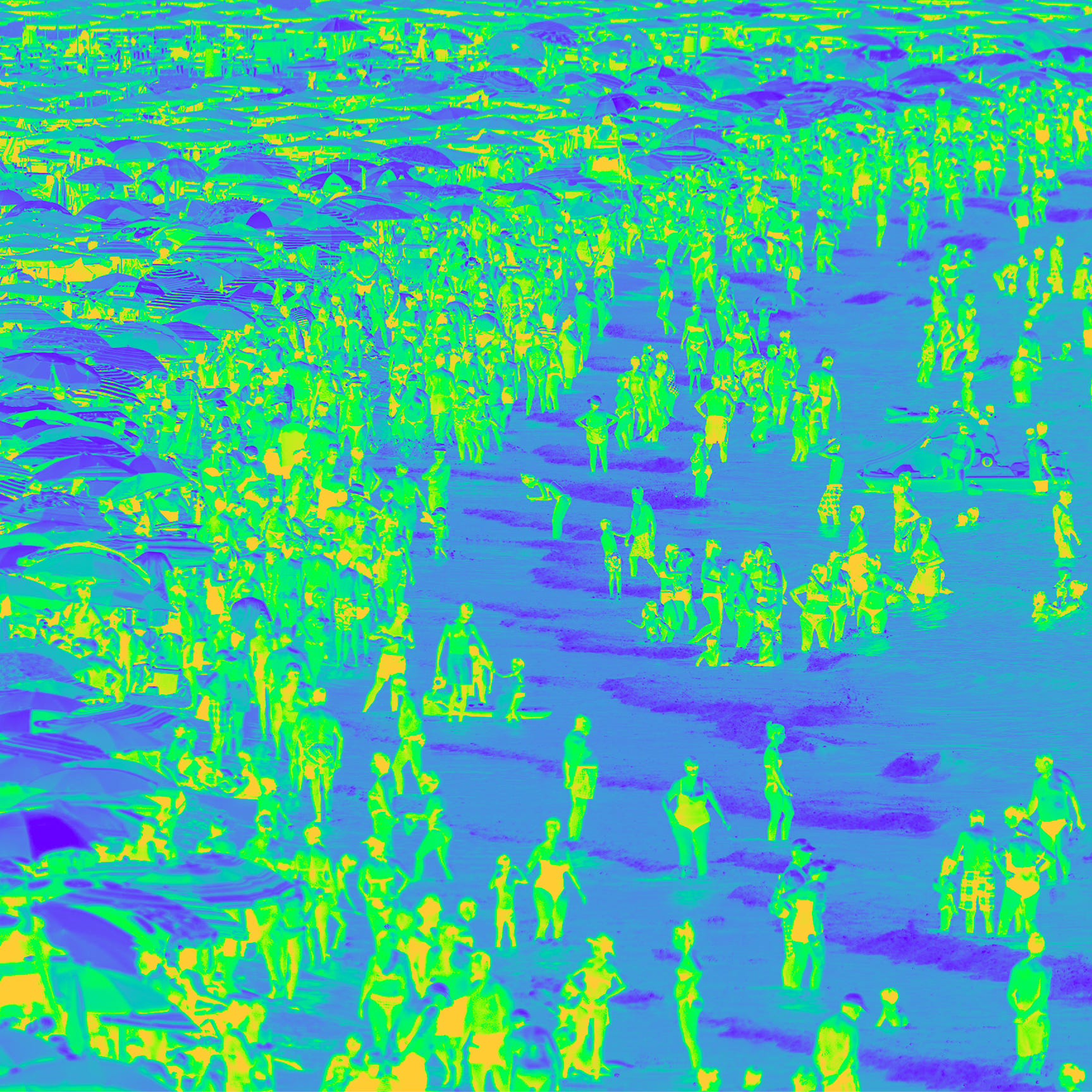
Heatmaps are used in everything from climate science to website analytics, to compress scattered data points into a single image using colour to show intensity. Regardless of the context, the logic is the same: to show areas where activity is concentrated. It’s like a time-lapse collapsed into one frame.
With this project, I wanted to surface hotspots of meaning—and focus on sense-making using heat as the editorial lens. This framing would allow me to hold space for many different cultural perspectives, and better still: curate a transcultural atmosphere. Because we can all relate to heat as Mediterraneans, let alone as human beings2. With that said, adopting this very specific framing made it easier for me to design the interview format.
The interview prompts (and decontextualised images)
I wanted to create a simple, repeatable format that blended creative prompts with cultural research—something intuitive and fun to get people opening up about culture, summer and everything in between3. I settled on a set of thought-starting questions and each question was paired with visual inspiration behind the scenes. Some questions were designed for more intuitive, self-indulgent answers, others for more critical and reflective ones. Curious to test the format on myself, I also went ahead and answered those questions here.
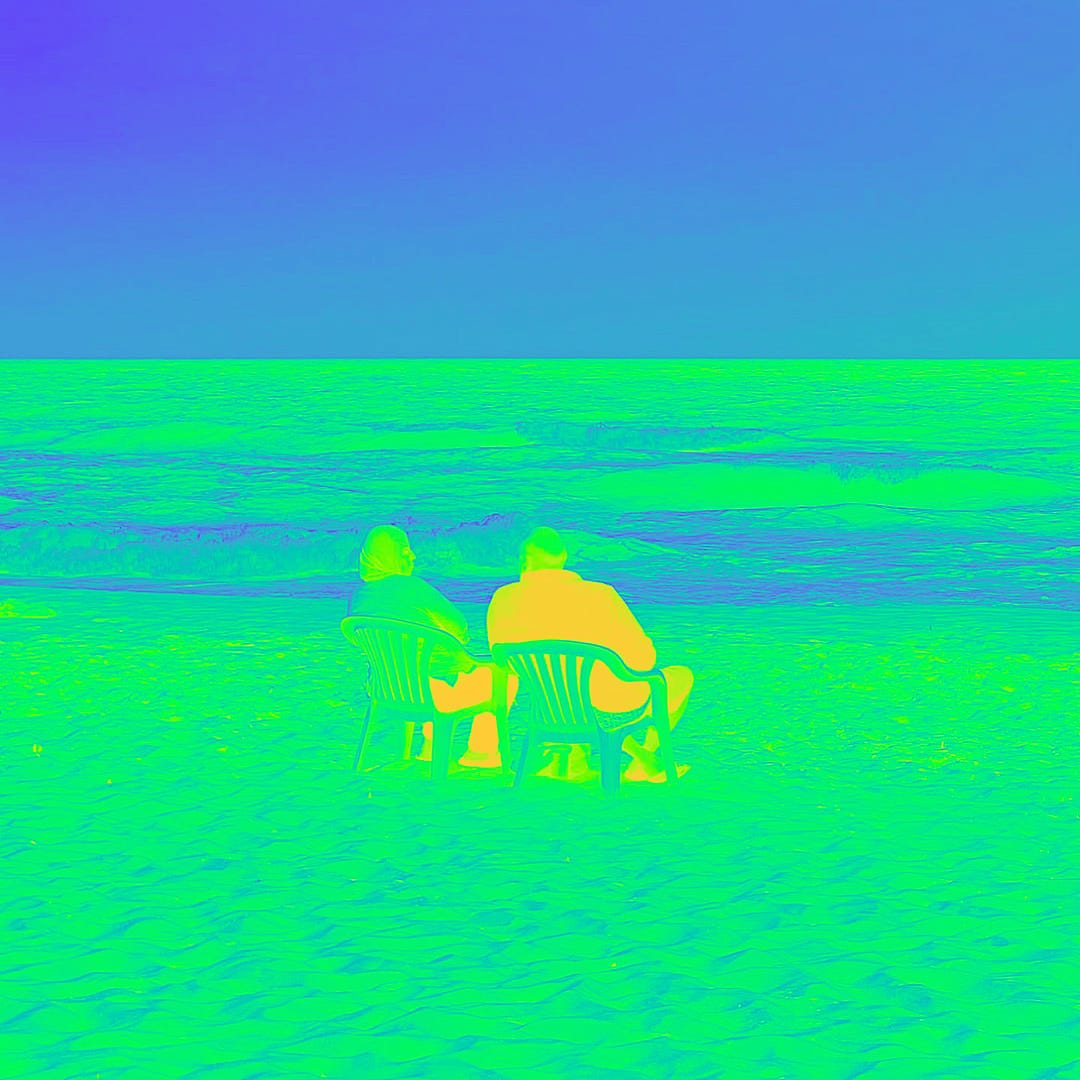
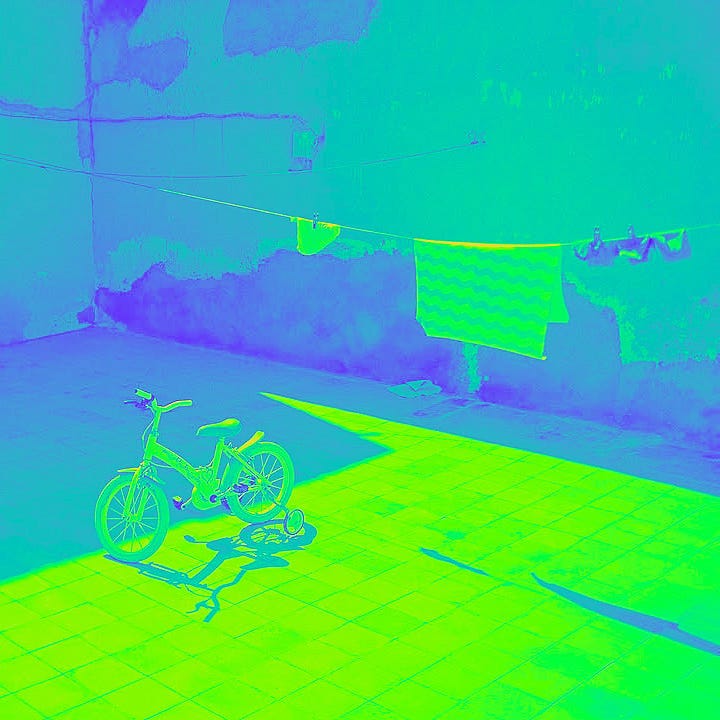
To add visual appeal to the posts, I asked guests to submit a few images, with one used as the header. At first I imagined a ‘photo diary’ look, with multiple images matched to each interview, but I realised that this would add too much friction to the process. So I took the opposite approach: embedding just one image per post, presented without captions to create a sense of Mediterranean togetherness. A watermelon truck, for example, could just as easily be taken in Greece, Egypt, or anywhere else in the Med.
2 • Insights
Heat as an omnipotent force
Across the interviews, the topic of heat was approached from all kinds of angles:
As a force that rules over the tempo of life, by dictating when work is possible, or when a siesta is the only thing that makes sense.
As an enemy—stifling and oppressive, to the point of surrender.
As a source of joy, by heightening the senses, lowering our guard and turning even ordinary moments into fond memories.
As a healer, to soothe body and mind, and recover from overstimulation.
It became apparent how much of an omnipotent force heat really is, both in the Mediterranean and beyond.
“Sometimes in the Mediterranean, heat holds too much power over daily life. It isn’t just weather—it shapes rhythms, productivity, and social life.” (Matteo)
Rituals of belonging and community
Contributors mentioned many types of Mediterranean rituals: shared meals, morning coffees, evening walks, and so on. Acts that preserve connection, community and family. What was also telling was how these rituals were framed as counterbalances: practices of slowness and intention in contrast to our fast-moving, chaotic world. They’re also a reminder that community alchemises through reciprocity and repetition.
“The ritual of a beach day. Grabbing food…all tossed in the middle of a table to share. Having an ice cream for a sweet treat. It’s simple, care-free and joyful.” (Begum)
Local preservation vs. global tourism
Another theme that came up repeatedly was the friction between preserving Mediterranean localities while acknowledging their commodification. Interviewees critiqued the rise of Eurosummer fantasies, private beach clubs and unhinged party-tourism. While tourism was recognised as an economic necessity, contributors were quick to point out the darker aspects: places being flattened into clichés, areas being gentrified to cater to tourists, and public beach access being eroded.
“[W]hile travel provides a much-needed influx of money, we’re really starting to see its negative effects in real time. Going on holiday shouldn’t equal leaving a place and its community worse than you found it.” (Mariella)
Emotional cartography
By design, every interview was adorned with nostalgic recollections and sensory snapshots, like cicadas droning in the heat, the mineral tang of sunscreen, figs split open under the sun. As the majority of the guests were diasporic Mediterraneans (many of them living in London and New York), it was fascinating how places in the Mediterranean were imprinted with the guests’ memories and emotions. True to the name of the project, the spaces that stood out were the ones where meaning was heightened: a terrace under the night sky, the morning coffee spot, the farmer’s market—to name a few.
“The chill spot…chatting, drinking, eating with family and friends. A yearly summer ritual, that if for some reason doesn’t happen, makes everything feel a bit off.” (Christos)
Slowness vs. acceleration
Summer slowness was a major theme that emerged for nearly every guest, and this was particularly noticeable when it came to the interview question on language. Non-English concepts like fjaka, yaz rehaveti, siya-siya and meriggiare exemplify expressions of a shared Mediterranean sensibility: slowness as a philosophy. Doing less, savouring time, and resisting pathological productivity. For many contributors, defending slowness was about preserving relationships, values and wellbeing—individual and collective.
“…people keep escaping to [the Mediterranean] to rediscover what it means to move through the world at human speed.” (Esther)
3 • Aspirations
Looking ahead, I would like to take Heatmaps into more structured and systematic territory, beyond a summer journal project. I see it as a space to bring diverse perspectives together, and to include more Mediterranean countries, particularly from the SWANA side of the region.
I’d love to explore more long-form cultural research on the topics surfaced in the interviews, ideally with like-minded writers and thinkers. I think this next chapter will also mean exploring suitable ways to support the work financially.
Finally, I’d also like to develop its creative direction, with more ambitious editorial design, and I’d be keen to collaborate with others on that.
If you can picture yourself getting involved in any of these ways…
Safe to say I’ll be showcasing even more cultural perspectives going forward, especially from those whose contributions I wasn’t able to publish this time round. If you're curious to see how the future plays out…
Last but not least, this series wouldn’t exist without the wonderful people I interviewed this summer, who generously shared their insights. A huge thank you to all of them. Here’s to their own projects thriving, and I hope our paths cross again soon.
Until then, may the heat always be in your favour.
Philip / Φίλιππος
A coming-of-age film well-known with British Millennials, released in 2011. Compare that to the more recent portrayal of British party tourism in How to Have Sex (2023), also set in Malia. That film offered a more critical perspective, by shining a light on the emotional and social consequences of normalised excess and blurred sexual consent in these environments.
And as a subtle nod to each guest’s background, the headings in each post were written in their respective language.
Very cool project. Nice to see an original approach to reporting and cultural analysis.
Loved this! Brilliant article, Phil! Thanks for sharing! ✨️🌎💚